Every January, homeowners across the country open their utility bills and wince at the total, wondering how a single month of cold weather could cost so much. The truth is that a spike in winter energy bills is rarely about the weather alone. More often, it points to an aging heating system that is quietly losing efficiency, working harder than it should, and costing you money with every cycle. Understanding why this happens can help you decide whether to repair, maintain, or replace your system before next winter arrives.
Aging Furnace Components and Declining Efficiency
Furnaces are built to last, but every mechanical part inside them wears down over time, and that wear translates directly into higher operating costs. Heat exchangers develop cracks, blower motors lose strength, and igniters weaken, all of which force the unit to run longer to reach the same temperature. When efficiency drops even slightly, your energy bill can climb by a noticeable percentage each month. Scheduling furnace repairs at the first sign of trouble, rather than waiting for a full breakdown, is one of the most effective ways to keep costs under control during the coldest months.
- Reduced heat output despite longer run times
- Unusual burning or musty odors when the system starts
- Rising bills without a change in thermostat settings
- Furnace short-cycling or shutting off unexpectedly
Dirty Filters and Restricted Airflow Problems
A clogged air filter is one of the simplest and most common reasons a heating system starts consuming extra energy. When airflow is restricted, the blower motor has to work significantly harder to push warm air through the ductwork, which increases electricity use and puts strain on other components. This strain often shortens the lifespan of the entire system, not just the filter itself. Replacing filters every one to three months is a small task that has an outsized impact on both comfort and cost.
Beyond the filter itself, dust and debris can accumulate inside the blower compartment and along duct connections, further choking airflow. This buildup forces the system to draw more power just to maintain normal circulation. Over time, homeowners often notice rooms that used to heat evenly now have cold spots, which is a clear sign airflow is compromised somewhere in the system.
Thermostat Miscalibration and Inconsistent Temperature Readings
An older or poorly calibrated thermostat can trick your heating system into running far more than necessary. If the thermostat reads a room as colder than it actually is, the furnace will kick on repeatedly, burning fuel or electricity without actually improving comfort. This mismatch between perceived and actual temperature is a hidden contributor to inflated winter bills that many homeowners never suspect. Testing your thermostat against a separate reliable thermometer once a season can reveal whether this is quietly draining your budget.
Smart and programmable thermostats can help correct this issue by learning your household patterns and adjusting more precisely than manual dials ever could. However, even smart thermostats need occasional recalibration or firmware updates to stay accurate. If your readings seem consistently off despite a newer thermostat, the issue may lie in the wiring or sensor placement rather than the device itself.
Leaky Ductwork and Heat Loss Throughout the Home
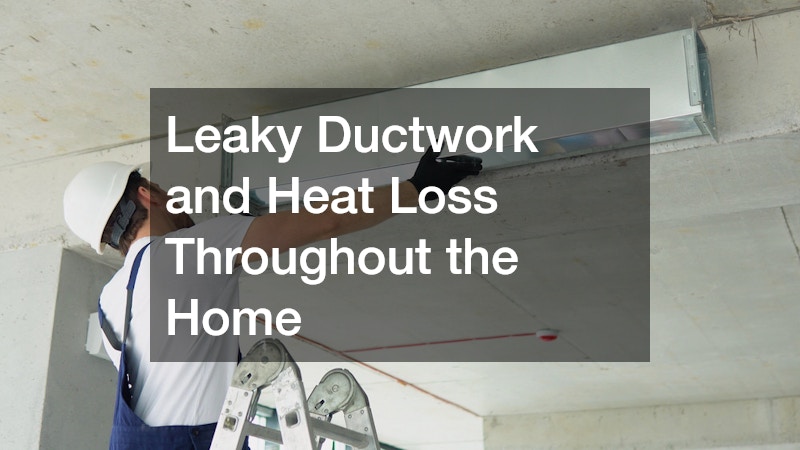
Ductwork that has cracked, separated, or loosened at the joints allows heated air to escape into attics, basements, and crawl spaces before it ever reaches your living areas. The Department of Energy estimates that a typical duct system loses around 20 to 30 percent of the air moving through it, meaning you are essentially paying to warm spaces you never use. In older homes, that leakage can be even higher if ducts run through unconditioned areas with wide temperature swings.
This is especially common in homes over fifteen years old, where duct sealant, mastic, and metal tape naturally degrade and pull away from the seams. Flexible ductwork is particularly vulnerable, since its connections can loosen as the home settles or as sections get bumped during attic storage or repairs. Rodents and pests can also chew through duct material, creating gaps that widen over time.
Signs of duct leakage include rooms that never quite reach the thermostat setting, unusually high dust buildup near vents, and a furnace that runs longer cycles without a clear improvement in comfort. A simple pressure test performed by a technician from a qualified HVAC company can pinpoint exactly where air is escaping, rather than leaving you to guess.
Insulating Exposed Ducts
Sealing and insulating exposed ductwork is one of the more overlooked ways to stop winter bills from creeping upward. Professional-grade mastic sealant tends to outperform standard duct tape, which dries out and fails within a few years. Wrapping insulation around ducts in attics and crawl spaces further reduces heat loss, even after leaks have been sealed.
- Visible gaps or disconnected sections at duct joints, often found in attics, crawl spaces, or basements where ducts flex over time
- Noticeably weak airflow at vents farthest from the furnace, a sign leaks along the way are stealing conditioned air before it arrives
- Excess dust or soot around vent covers, indicating air escaping nearby and pulling in unconditioned, particle-laden air from hidden spaces
- Rooms that stay cold despite the thermostat reaching its set point, forcing the furnace to run longer cycles to compensate
- Unexplained spikes in humidity or musty odors near vents, which can point to duct leaks drawing in air from damp crawl spaces
- Higher-than-expected utility bills even after a furnace tune-up, since the Department of Energy estimates up to 20-30% of heated air can be lost through duct leaks
- Duct tape or foil tape that’s peeling or brittle at seams, a quick visual cue that old repairs have failed and need professional sealing
Aging Heat Pumps and Reduced Cold Weather Performance
Heat pumps are efficient for much of the year, but as they age, their ability to extract heat from cold outdoor air diminishes considerably. A unit that once performed well in freezing temperatures may struggle once it passes the ten to fifteen year mark, relying heavily on backup electric resistance heating to compensate. That backup heat is far more expensive to run, which explains why some homeowners see winter bills double even though nothing seems obviously broken. If you rely on a heat pump as part of your heating and air conditioning setup, seasonal performance checks become even more important as the unit ages.
Delayed Maintenance and the Cost of Ignoring Small Problems
Many homeowners put off small heating issues, assuming a minor rattle or slightly weaker airflow isn’t worth addressing right away. Unfortunately, small inefficiencies compound over a full winter, and what starts as a five percent efficiency loss can quietly grow into twenty or thirty percent by February. Waiting also increases the odds that a manageable issue turns into a major component failure requiring costly parts replacement. Scheduling heating repairs as soon as issues arise, rather than letting them linger, can prevent these small inefficiencies from snowballing. Partnering with a local heating service for routine seasonal checkups can catch these small problems before they turn into expensive ones.
Annual maintenance visits typically include cleaning burners, checking electrical connections, testing safety controls, and verifying that the system is calibrated to manufacturer specifications. Skipping even one or two years of maintenance allows dust, corrosion, and mechanical drift to accumulate unnoticed. This is often why a system that seemed fine last winter suddenly struggles this year.
Recognizing When a Repair Turns Into a Necessity
Not every heating issue announces itself with a dramatic breakdown. Sometimes it’s a subtle decline in performance that homeowners attribute to “just getting colder outside,” when in reality the system itself is failing to keep pace. Knowing the warning signs of a struggling system can help you get ahead of the problem before it becomes an emergency.
- Strange clicking, banging, or grinding noises during operation
- A noticeable increase in dust or soot around vents
- Uneven heating between rooms or floors
- Frequent cycling on and off within short intervals
- A sudden spike in gas or electric usage compared to prior months
Choosing the Right Professional for System Evaluation
When your system starts underperforming, the provider you choose matters just as much as the repair itself. Not all HVAC repair companies offer the same level of diagnostic thoroughness, and a rushed inspection can miss the root cause of rising energy costs. Look for a provider who takes time to test airflow, combustion efficiency, and electrical components rather than simply replacing the most obvious part. Trustworthy HVAC repair companies will also explain what they found in plain language, helping you understand whether a repair or eventual replacement makes more financial sense.
It also helps to ask about licensing, insurance, and manufacturer certifications before scheduling a visit. Technicians trained specifically in HVAC repair are more likely to spot subtle efficiency issues that a general handyman might overlook. Getting a second opinion for larger repairs is a reasonable step, especially if the estimated cost is close to the price of a new unit.
Preparing for Unexpected Breakdowns During Extreme Cold
Even well-maintained systems can fail unexpectedly during a hard freeze, often at the worst possible time — like a Sunday night when temperatures drop into the single digits and every HVAC company’s regular office is closed. Having a plan in place before that happens can prevent frozen pipes, safety hazards, and prolonged discomfort. Knowing who to call and what to check first can save valuable time when temperatures drop suddenly.
It’s also worth keeping a small emergency kit on hand — space heaters (used safely and never left unattended), extra blankets, and pipe insulation sleeves for exposed plumbing in basements or crawl spaces. If your home relies on a single heat source, consider a backup plan, whether that’s a generator, a fireplace, or a nearby relative’s house, in case the outage stretches overnight.
- Save the contact information for a trusted emergency HVAC repair provider in your phone, and confirm they offer 24/7 service before you need it
- Ask your regular HVAC repair company if they provide priority scheduling for existing customers during cold snaps
- Know the location of your furnace’s power switch and gas shutoff valve, and make sure every adult in the household can find them quickly
- Have a backup heat source, such as space heaters or a battery-powered heater, for short-term use if the furnace fails overnight
- Stock extra blankets and warm layers so the household can stay safe for a few hours without relying on backup heat
- Check that carbon monoxide detectors are working before winter begins, and replace batteries even if they still show a charge
- Avoid using ovens or stoves as a substitute heating source, since this risks carbon monoxide buildup and fire hazards
Weighing Repair Versus Replacement Before Next Winter
At some point, every aging system reaches a stage where continued repairs no longer make financial sense. A commonly cited industry guideline is the “5,000 rule”: multiply the age of your unit by the estimated repair cost, and if that number exceeds 5,000, replacement is typically the smarter move. If your furnace requires frequent furnace repair service calls each season, or if repair costs approach fifty percent of a replacement unit’s price, it’s usually time to consider an upgrade.
Age matters too. Furnaces generally last 15 to 20 years, while heat pumps and air conditioners average closer to 10 to 15, so a system nearing the end of that range deserves extra scrutiny even if it’s currently running. Track how often you’ve called for HVAC repair over the past two or three winters — one or two isolated fixes are normal wear and tear, but three or more in a single season is a red flag that components are failing in cascade.
Comparing the age of your system, frequency of HVAC repairs, and rising utility costs side by side gives you a clearer, more objective picture than relying on gut instinct alone. When in doubt, ask your technician for a written cost comparison of repair versus replacement before winter demand makes appointments harder to schedule.
Winter energy spikes are rarely random, and in most cases they trace back to a system that is aging, poorly maintained, or quietly losing efficiency somewhere along the line. Paying attention to airflow, unusual noises, uneven heating, and climbing utility costs can help you catch problems early, before they become expensive emergencies. Taking action now, whether that means a simple filter change or a full system evaluation, puts you back in control of your comfort and your budget. The sooner you address these warning signs, the better positioned you’ll be to get through the rest of winter without another unpleasant bill.